
The AI landscape has become crowded with thousands of tools promising to revolutionize your workflow. But here’s what most businesses discover: only a handful deliver measurable results. After analyzing hundreds of AI solutions and their real-world applications across multiple industries, certain platforms consistently stand out for their practical impact on revenue, efficiency, and competitive positioning.
This guide breaks down twelve AI tools that solve actual business problems rather than creating new complexity. Each tool addresses a specific operational bottleneck, from meeting documentation to customer acquisition to strategic decision-making.
Meeting Intelligence That Actually Works
Granola: Private Meeting Documentation
Most AI notetakers force participants to accept a bot into meetings, which creates immediate friction with clients and partners. Granola takes a different approach by processing audio locally on your device without broadcasting that you’re recording.
What makes this tool particularly valuable is its hybrid documentation model. You can type your own notes during the meeting, and afterward, Granola merges your manual input with AI-generated transcripts. This creates comprehensive records that combine your judgment with complete accuracy.
The real competitive advantage emerges from its search functionality. When you need to recall specific discussions about pricing negotiations or feature requests across months of meetings, you can query your entire meeting history instantly. This transforms scattered conversations into a searchable knowledge base.
Workflow Automation That Scales
N8N: Advanced Business Process Automation
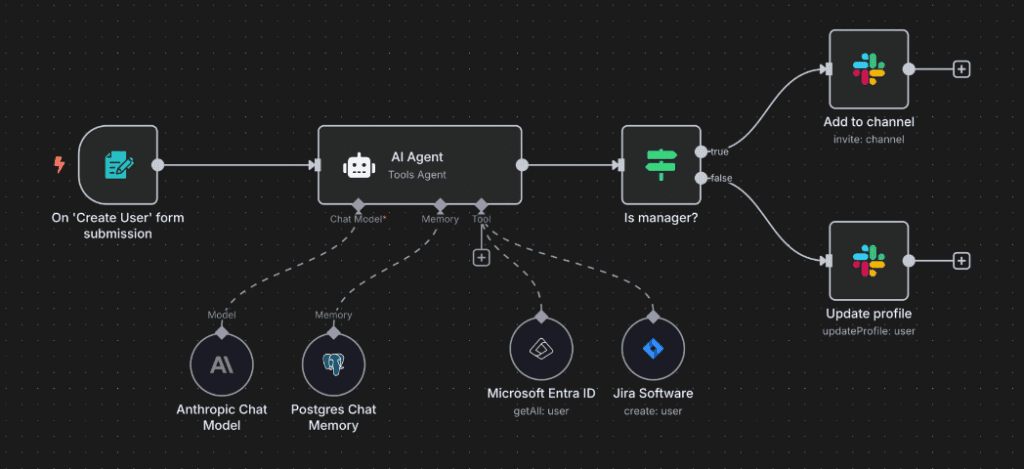
Automation represents the most direct path to scaling operations without proportional increases in headcount. N8N enables businesses to connect disparate systems and use AI for routing decisions and workflow logic.
Consider a complete customer onboarding sequence that runs automatically:
Stage 1: Trigger and Data Capture
When payment processes, customer information flows directly into your CRM without manual data entry.
Stage 2: Personalized Communication
The system sends welcome emails customized based on the product purchased, customer industry, or information gathered during sales conversations.
Stage 3: Information Gathering
Customers receive intake forms to provide detailed requirements. Advanced implementations can replace forms with AI voice calls that feel like conversations with a real assistant.
Stage 4: Community Integration
Automatic invitations to support channels, Slack communities, or resource libraries ensure customers know where to find help.
Stage 5: Smart Follow-ups
The system monitors completion status and sends targeted reminders only for incomplete steps, avoiding unnecessary communication.
Stage 6: Human Touchpoint Scheduling
Once preliminary steps are complete, the workflow automatically schedules calls with team members.
Stage 7: Dynamic Presentation Generation
Before the scheduled call, automation creates a customized presentation based on intake form responses, showing customers exactly how your solution addresses their specific situation.
For teams requiring simpler implementation, Make.com offers more accessible automation, while Zapier provides the most established platform with extensive integrations. Keep watch on OpenAI’s agent builder development, as emerging platforms may simplify complex automation significantly.
Application Development Without Developers
Lovable: Natural Language App Creation
The barrier between having an application idea and deploying a functional tool has collapsed. Lovable allows anyone who can describe their needs in plain language to build working applications.
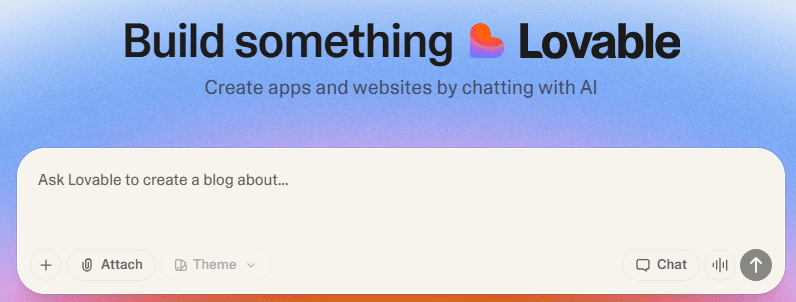
In practical application, imagine running a social media marketing agency targeting plumbers in the Midwest. You need a specialized landing page for this audience. Simply instruct Lovable to build a landing page for plumbing businesses, and it generates the complete page instantly.
Want to add Stripe payment processing for deposits? Request it. Need a detailed intake form to collect customer information? Describe what you need. The platform adds each feature iteratively based on your instructions.
This fundamentally changes the economics of business software. Tasks that previously required hiring developers, negotiating specifications, and waiting weeks for delivery now happen in real-time through conversational interfaces. Speed of execution becomes a competitive weapon rather than a constraint.
Lead Conversion Through AI Communication
Atlas: Intelligent Lead Qualification and Booking
Speed-to-lead remains one of the highest-impact metrics in sales operations. The faster you contact someone who expresses interest, the higher your conversion rate. Atlas automates this completely by calling leads immediately when they submit forms.
The system qualifies prospects, handles objections, and books meetings automatically. It operates continuously without breaks, bad days, or script deviation. When someone fills out a form at midnight, they receive a call within seconds rather than waiting until business hours.
What makes AI calling particularly effective is persistence. If a prospect hangs up before confirming an appointment, the system calls back to complete the booking. This level of consistent follow-up is difficult for human teams to maintain across high lead volumes.
Voice Technology for Content and Communication
ElevenLabs: Professional Voice Cloning
Voice cloning technology has reached the point where AI-generated audio is indistinguishable from human recording. ElevenLabs enables businesses to create perfect voice replicas for content production and customer communication.
The immediate application is content correction. When you record video content and make mistakes, editors can now fix audio errors using your cloned voice rather than requiring you to re-record segments. This dramatically reduces production time.
For business owners creating content marketing, the workflow becomes:
- Create a voice clone by providing clean audio samples
- Identify existing videos with energy problems, mistakes, or missing information
- Have editors use the voice clone to fix issues
- Publish updated content without scheduling new recording sessions
The scalability advantage is significant. Content creators can have copywriters develop scripts, generate audio using voice clones, and publish platform-specific content without personally recording every piece.
HeyGen: AI Video Avatars
While many professionals initially resist AI avatar technology, the quality has improved to the point where it’s becoming indistinguishable from camera recording. HeyGen creates video avatars that speak in your voice and mannerisms.
The primary use case is removing yourself from the content production bottleneck. When you need to create educational content, marketing messages, or customer communications but lack time to film, editors can generate videos using your avatar.
The workflow is straightforward:
- Write the script using AI or human copywriters
- Upload to HeyGen and select your avatar
- Export a ready-to-publish video
This doesn’t replace high-value personal content, but it enables consistent communication when your time is better spent on strategic activities. As the technology continues improving, resistance based on current quality will quickly become outdated.
Strategic Thinking and Problem-Solving
ChatGPT Voice Mode: AI Strategic Partner
The most underutilized AI capability is hands-free strategic conversation. ChatGPT’s voice mode enables you to use AI as a thinking partner while walking, driving, or exercising.
The power lies in verbal processing. Many strategic challenges remain unclear because they stay in your head as vague concerns. Speaking them aloud to an AI that asks clarifying questions forces you to articulate problems precisely.
For strategic business decisions, use this framework:
Step 1: Set Expectations
Tell the AI to challenge your thinking, ask tough questions, and push back on weak reasoning rather than agreeing with everything.
Step 2: Frame the Challenge
Describe your business problem and specify the analytical framework you want to use. Theory of Constraints is particularly effective for identifying operational bottlenecks.
Step 3: Provide Data
Share relevant metrics about marketing performance, sales conversion, delivery capacity, or whatever areas relate to your challenge.
Step 4: Request Solutions with Constraints
Ask for specific solutions given your actual resources, team size, and timeline. Without constraints, AI suggestions become impractical.
Step 5: Prioritization
Have the AI rank solutions based on your available time, team capabilities, and strategic objectives.
This process transforms vague concerns into actionable plans backed by logical analysis. Your entire team can use this approach to work through operational challenges more efficiently than traditional brainstorming.
Data-Driven Decision Making
Precision: Intelligent Business Analytics
Most businesses struggle with three data challenges: identifying which metrics matter, understanding whether their numbers are good, and knowing how to improve them. Precision addresses all three by consolidating data sources and providing AI-driven insights.
Instead of building dashboards manually and interpreting data yourself, Precision connects to your CRM, billing systems, and marketing platforms, then generates executive scorecards automatically based on your industry and business model.
The daily workflow becomes:
- Receive morning KPI updates with context
- Get alerts about anomalies that need attention
- See recommended actions to improve specific metrics
- Focus team attention on the single most impactful opportunity
This eliminates the common problem of leaders creating imaginary problems because they’re not looking at the right data. When everyone sees the same scorecard with clear priorities, execution becomes more focused and effective.
Executive Assistance Through Automation
Fyxer: AI Operations Assistant
Executive assistants handle calendar management, travel coordination, vendor communication, SOP documentation, and follow-ups. Fyxer automates these operational tasks using AI.
The implementation process:
- Import all standard operating procedures and company playbooks
- Grant the system access to your email inbox
- Review weekly digests of completed actions and exceptions requiring human decisions
This doesn’t eliminate the need for human executive assistants, since many communications require judgment and relationship management. However, it handles routine operational tasks automatically, letting human assistants focus on higher-value work.
Many business owners avoid hiring executive assistants because they don’t know what tasks to delegate. The solution is having clear documentation of recurring responsibilities and decision frameworks.
Visual Communication and Presentations
Gamma: AI-Powered Visual Design
Human brains process visual information more effectively than text. Gamma converts written content into professional presentations, documents, and web pages automatically.
The practical impact is significant. When strategy documents sit in Google Docs, teams disengage during meetings. Converting the same information into visual presentations with slides, charts, and callouts increases attention and comprehension dramatically.
The creation process is simple:
- Write or paste your content
- Let Gamma generate layouts and visual elements
- Review and adjust as needed
- Export as PDF or publish as a web page
This transforms internal communication by making every strategic document visually engaging rather than expecting people to process walls of text.
Company Knowledge Management
BuddyPro: Organizational Brain
Every business owner accumulates years of knowledge, frameworks, beliefs, and strategic thinking. BuddyPro captures this institutional knowledge and makes it accessible to team members and customers through conversational AI.
When team members have questions that would normally require your input, they can query the system and receive answers consistent with your thinking. This scales your decision-making without creating bottlenecks.
The implementation process:
- Upload all available knowledge sources including emails, social media content, training materials, and documentation
- Organize your core beliefs and principles into categories
- Add context about individual team members or customers so responses are personalized
For customer-facing use, imagine loading every customer’s purchase history, support conversations, and recorded calls into their personal context. When they ask questions, they receive answers specific to their situation rather than generic responses.
This transforms support, customer success, coaching, and internal training by making expert knowledge accessible instantly.
Voice-First Customer Experience
Vapi: Voice API for Business Applications
Voice interfaces are becoming the preferred method of interaction because they’re faster and more natural than forms. Vapi enables businesses to build voice-powered applications for customer interactions.
A practical example: A customer needed to find the best price on a specific Rolex model. They built a voice agent that called dozens of dealers, negotiated prices using a scripted approach, logged all offers into a spreadsheet, and identified the lowest price. The entire process ran automatically.
For business applications, consider this support workflow:
- Customer calls your support line
- AI takes the call and identifies their problem
- System attempts to resolve the issue using your knowledge base
- If unsuccessful, routes to a human team member with full context
- After resolution, update the AI’s knowledge so it handles similar issues automatically
This starts by augmenting human support, then gradually automates routine issues as the system learns. Team members can then focus on complex problems requiring human judgment.
Voice is creating entirely new business models. Rather than optimizing existing processes, consider what new services become possible when customers can interact through natural conversation rather than forms and interfaces.
Implementation Strategy
With twelve powerful tools available, the critical question is where to start. Attempting to implement everything simultaneously creates chaos and dilutes focus.
The most effective approach:
- Choose one tool that addresses your most significant bottleneck
- Block 90 minutes on your calendar this week
- Implement it completely rather than partially
- Measure the impact
- Move to the next tool only after the first delivers results
This creates momentum through stacked wins rather than scattered half-implementations. If you complete one meaningful AI integration weekly, you’ll transform your operations within three months.
The Competitive Reality
Business competition is rapidly dividing into two categories: companies that integrate AI deeply into operations, and companies that don’t. This isn’t about using AI for novelty—it’s about fundamental operational advantages in speed, cost structure, and customer experience.
The businesses that treat AI as optional will find themselves competing against organizations that operate faster, serve customers better, and maintain significantly lower costs. This advantage compounds over time as AI-powered businesses reinvest efficiency gains into further improvements.
The barrier isn’t technical complexity. These tools are designed for business operators, not engineers. The barrier is decision-making and commitment to ongoing learning as capabilities evolve rapidly.
Make AI integration a cultural priority. Train teams continuously. Experiment with new capabilities every few months. The competitive gap between early adopters and late movers will become insurmountable within the next few years.