
By a Technology & AI Industry Correspondent | March 2026
In Silicon Valley, a $3 billion valuation is nothing to scoff at. But tripling that figure in just six months? That’s the kind of growth story that stops investors mid-pitch and makes competitors reach for their phones.
That’s exactly what happened to Replit. In late 2025, the San Francisco-based AI coding platform raised $250 million at a $3 billion valuation. Then, in early 2026, it closed a fresh $400 million round — led by Toronto-based venture firm Georgian, with backing from Andreessen Horowitz, Coatue, and even sovereign wealth funds including Qatar’s QIA — that pushed its valuation to $9 billion.
The numbers are staggering. But they make a lot more sense once you understand what Replit is actually building, and why the world is starting to pay serious attention.
What Is Replit? The Platform Rethinking Who Gets to Code
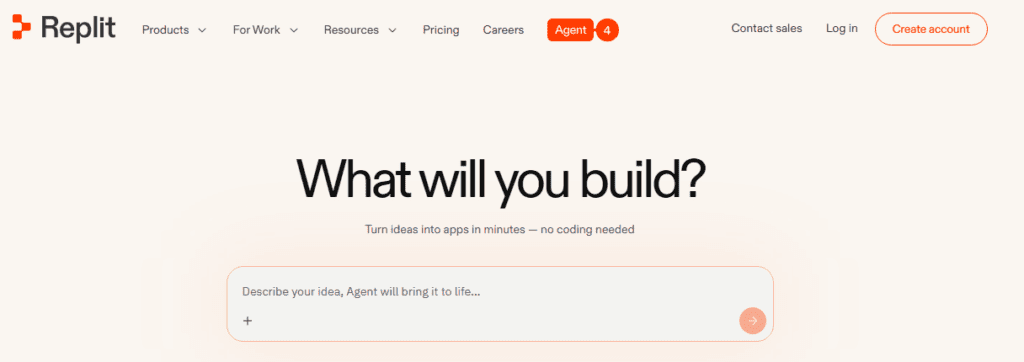
Replit was founded in 2016 by Amjad Masad, Faris Masad, and Haya Odeh. Their founding premise was almost radical in its simplicity: anyone should be able to build software, not just trained engineers.
At its core, Replit is a browser-based development environment. There’s nothing to download, no local setup required, no hours lost configuring dependencies. You open a browser tab, and you’re ready to code — or, increasingly, ready to describe what you want to build and let AI do the heavy lifting.
For years, Replit was dismissed by some investors as a toy — a novelty for students, hobbyists, and beginners who didn’t know better. Y Combinator initially rejected it. Pitch meetings went cold. But the founders kept building, driven by a mission that has only grown more relevant with time: empower a billion developers and entrepreneurs by removing the technical barriers between an idea and a working product.
Today, with over 150,000 paying customers and $240 million in revenue generated in 2025 alone, that mission is no longer a founder’s dream. It’s a business reality.
The Rise of AI Coding Platforms: Why Now?
To understand Replit’s explosive growth, you have to zoom out and look at what’s happened to the software development landscape over the past two years.
Generative AI didn’t just give developers a smarter autocomplete tool. It fundamentally changed the economics and accessibility of writing software. What once required years of specialized training can now be initiated with a plain-English description. Code that would have taken an experienced developer days to write can be generated in seconds.
The demand for AI developer tools has exploded accordingly. GitHub Copilot now claims over 15 million professional developer users. Cursor — one of Replit’s most direct rivals — saw its annualized revenue surge past $2 billion in recent months. Anthropic’s Claude Code reached $2.5 billion in annualized revenue. The market isn’t just growing; it’s transforming.
But here’s where Replit’s bet diverges from most of its competitors. While tools like Cursor are built for professional developers who want AI to accelerate their existing workflows, Replit is targeting a completely different audience: the non-technical user who has an idea but has never written a line of code in their life.
As CEO Amjad Masad declared in early 2025: professional coders are no longer the primary target. The future belongs to marketers, small business owners, sales teams, and entrepreneurs who want to build — and Replit wants to be the platform that hands them that power.
How Replit Grew From $3B to $9B: Breaking Down the Surge
So what actually happened between September 2025 and early 2026 to justify a tripling of Replit’s valuation? Several forces converged at once.
Revenue growth that’s hard to ignore. Replit’s annualized recurring revenue grew roughly five-fold over a six-month period, reaching $150 million ARR by September 2025 — up from just $10 million at the end of 2024. Full-year 2025 revenue came in at approximately $240 million. The company is now targeting $1 billion in revenue by 2026. That kind of trajectory is catnip for growth investors.
The launch of Agent 4. Replit’s most advanced AI agent yet, Agent 4, represented a significant product leap. Rather than simply suggesting code, Agent 4 can autonomously test code, identify and fix complex bugs, generate automated workflows, and guide users through the entire build process — from initial idea to deployed application. It’s less a coding assistant and more a junior software engineer that never sleeps.
Mobile app creation for everyone. In early 2026, Replit launched Mobile Apps on Replit for iOS and Android — a feature that allows users to describe an app idea in plain language and receive a working, deployable mobile application in return. With Stripe integration baked in from the start, creators can go from concept to a monetized app on the Apple App Store within days, not months. That’s a genuinely transformative capability.
The “vibe coding” moment. The broader concept of vibe coding — building software through conversational AI prompts rather than manual programming — went mainstream in 2025. Replit didn’t invent the term, but it became one of the most visible standard-bearers for the movement. When the cultural narrative around AI shifted from “AI helps developers” to “AI builds for everyone,” Replit was perfectly positioned.
Strategic investor confidence. The composition of Replit’s latest funding round tells its own story. Alongside institutional heavyweights like Georgian and a16z, the round included sovereign wealth funds and strategic partners spanning Accenture Ventures, Databricks Ventures, and Okta Ventures. That breadth of participation signals something beyond financial speculation — it signals infrastructure-level conviction.
Key Features That Make Replit a Powerful AI Programming Tool
Replit’s valuation isn’t built on hype alone. The platform has accumulated a genuinely compelling feature set that distinguishes it in a crowded field of AI programming tools.
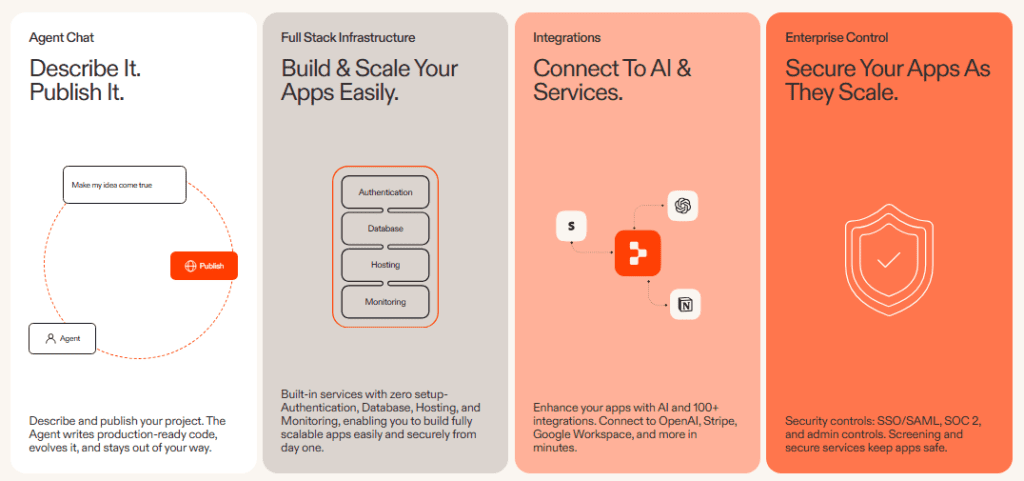
AI Coding Agents At the heart of the Replit experience is its AI agent technology. Users can describe what they want to build — a customer dashboard, a 3D game, a data visualization tool — and Replit’s agent will generate the code, handle errors, iterate on feedback, and guide the product toward deployment. Unlike traditional IDE integrations, this is an end-to-end workflow, not a smart suggestion engine.
Browser-Based Development Replit’s cloud-first architecture means there is no installation barrier. Any device with a browser can become a development environment. For users in emerging markets — a key focus of Replit’s expansion plans, particularly in Asia and the Middle East — this accessibility is genuinely transformative.
Collaborative Coding Replit allows multiple users to build together in real time, much like collaborating on a Google Doc. Teams can ideate, prototype, and ship together without complex version control setups. For non-technical teams that want to build internal tools, this collaborative layer is often the deciding factor.
Instant Deployment Perhaps the most powerful feature for non-developers is how Replit handles deployment. There’s no separate server to configure, no DevOps expertise required. Apps built on the platform can be pushed live with minimal friction — and with built-in integrations for payments, security, and hosting, the path from idea to functional product is shorter than it has ever been.
Why Investors Are Betting Big on AI Developer Tools
The investment story around Replit doesn’t exist in isolation. It’s part of a broader, accelerating wave of capital flowing into the AI developer tools space.
Cursor’s creator, Anysphere, raised $2.3 billion at a $29.3 billion valuation in late 2025. Europe’s Lovable achieved a $6.6 billion valuation. Anthropic — Replit’s biggest competitive threat — is valued at $380 billion. Across the board, investors are placing enormous bets on the companies building the software layer of the AI economy.
Why? Because developer tools are infrastructure. Every business that wants to leverage AI will need platforms to build, deploy, and manage AI-powered applications. The companies that control those workflows will sit at the center of an enormous value chain.
Replit’s specific pitch to investors is differentiated by its focus on accessibility and market size. If professional developers represent a market of tens of millions globally, the potential market of non-technical people who want to build software is measured in the billions. That’s the market Replit is chasing — and for investors who believe that bet will pay off, $9 billion starts to look like a reasonable entry point.
Margaret Wu, who led Georgian’s investment in the company, put it succinctly: “They are showing the industry the art of the possible.”
What This Means for the Future of AI Coding
The implications of Replit’s rise extend well beyond one company’s valuation or one funding round. They point toward a fundamental shift in what software development means — and who gets to do it.
The role of the professional developer is changing. This doesn’t mean developers are being replaced. It means the nature of their work is evolving. As AI handles more of the routine, syntax-level tasks, developers will increasingly operate as architects, reviewers, and strategists — defining what gets built rather than manually constructing every component.
The barrier to entrepreneurship is dropping. A small business owner in Lagos, a teacher in Manila, a freelancer in São Paulo — all of them can now, in theory, build a functional software product without hiring a development team or learning to code. Replit, and platforms like it, are making that a practical reality rather than a theoretical one.
The definition of “developer” is expanding. When Replit’s CEO says the future belongs to non-coders using AI tools, he’s not being provocative — he’s describing a trend already underway. Employees at companies like Zillow and Duolingo are using Replit to prototype and deploy internal tools at speeds that would have been unimaginable five years ago.
Competition will intensify. Replit’s biggest challenge isn’t proving its vision. It’s executing fast enough in a field where Anthropic, OpenAI, GitHub, and dozens of well-funded startups are all racing toward similar goals. Claude Code, in particular, has emerged as a formidable rival with deep model integration and $2.5 billion in annualized revenue. The next 18 months will test whether Replit’s focus on accessibility and non-technical users is a durable competitive moat — or a niche that larger platforms will simply absorb.
The Bottom Line
From a browser toy dismissed by Y Combinator to a $9 billion AI coding platform targeting $1 billion in annual revenue — Replit’s journey is one of the most compelling startup stories of the current AI era.
The tripling of its valuation in six months wasn’t a fluke or a product of market irrationality. It was the logical result of a team that held onto a counterintuitive vision — that software should be for everyone — and built it into a product just as the world became ready to believe them.
The future of AI coding isn’t just about making developers faster. It’s about expanding the definition of who a developer is. If Replit’s bet is right, that future belongs to a billion people who have never written a line of code in their lives.
And that’s a market worth far more than $9 billion.